
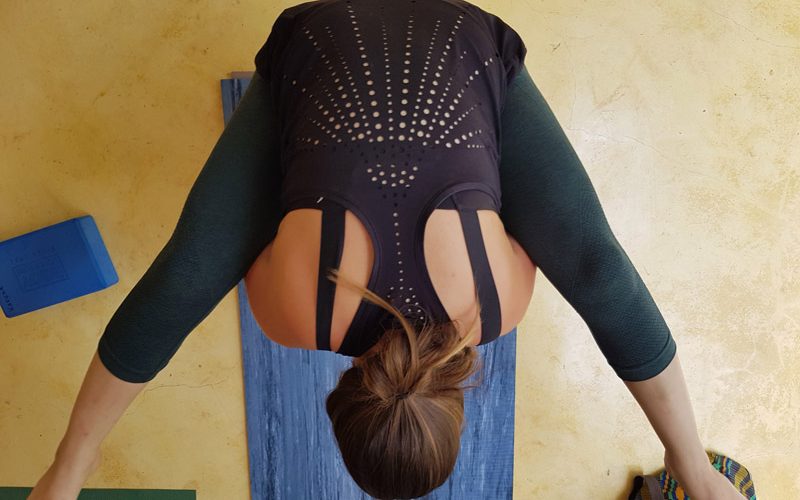
A yoga teacher training is a wonderful opportunity to deepen your practice and to experience the vastness that yoga is. But choosing the right YTT is imperative. Whether your goal is teaching, running retreats and workshops or you have no plans to teach just simply fancy 3 weeks focusing on yourself, your growth and your practice, there are basics that a YTT should cover in order to keep you (and your students) safe and inspired.
These are the seven essential things we think a 200-hour yoga teacher training should be considering.
1) A safe practice
Yoga injuries are on the up. We all know that the same continuous movement over time is likely to cause an injury. Think about tennis elbow, or repetitive use of the computer mouse. Yet we return to our mat every day and flow through often repetitive sequences because we love the way yoga soothes our mind and makes life better. So what do we do when the very thing we love starts hurting us?
Leyla and Payal have pondered on this quandary over the last few years. In a bid to find a solution they have attended trainings, listened to fresh ideas on trusted podcasts and as a result of their studies and through having open and curious minds they have made changes to the way they sequence and are challenging what you might have learned before.
We don’t teach in a way that repeats ancient traditional practices simply because they are ancient and traditional. We believe changes need to happen even on the yoga mat as our practice is being used differently to what the ancient texts suggested. We teach that the body needs to move multi directional, we teach to avoid repetitive stress by spicing things up. We believe that there are instances where traditional asana alignment should be looked at with an open mind and sense of curiosity to help create a safer practice. We don’t teach something because that’s the way its always been done, we teach it because it works on the individual body that is practicing. We teach there is non negotiable alignment ie the position of the knees and hips in padmasana but then there is negotiable alignment for instance the back leg in virabradrasana II.
2) Sound Yoga Anatomy
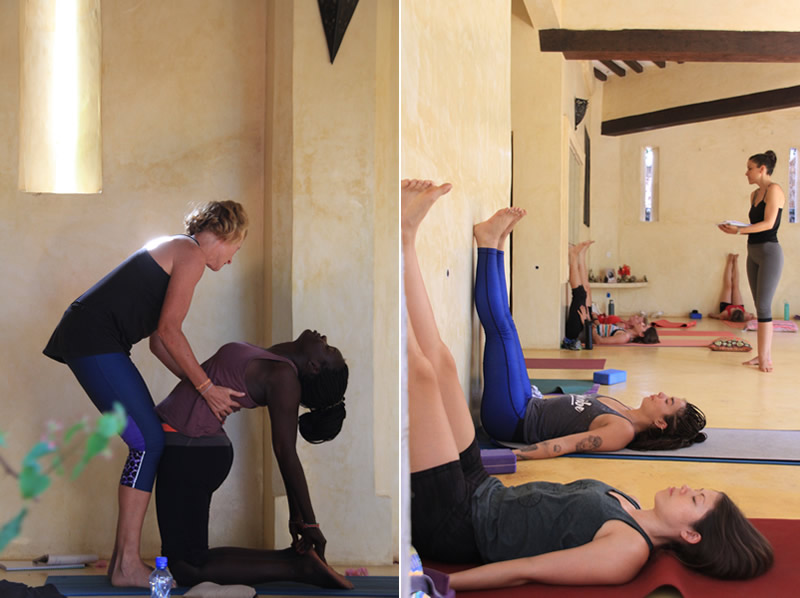
Our anatomy is lead by a doctor who makes everything fun. We believe sound anatomy will enrich your self practice as you will understand the systems of the body more fully. You’ll learn how to protect your muscles, joints and bones and how to keep your students safe too no matter their body type and unique quirks they carry in life.
3) Philosophy
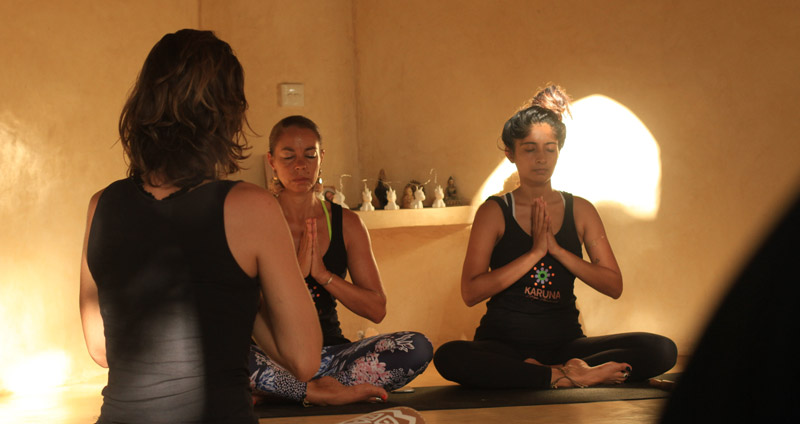
The depth of yoga philosophy is immense. The philosophy component of a YTT should be lead by an individual who is fascinated by the ancient techniques and wisdom and is on the path of modern day self exploration and discovery. Being able to present philosophy in a way that is meaningful and easy to relate to brings this component to life.

4) An understanding of touch and adjusting
Because our company was born in Uganda, we are in the unique position of living beside and working with fascinating individuals who are passionate about creating impact, human rights, women empowerment and justice (among many others). This means our community has on many occasions witnessed or experienced trauma. Our YTTs are trauma informed and our co founder Leyla studied shiatsu for 3 years meaning safe and relevant touch are of the utmost importance to us.
As with safe alignment, there is no one touch that works for all. We believe a good YTT asks students to remain thoughtful, mindful and empathetic to the bodies of others. When adjusting or touching another we ask; Is it necessary, is it appropriate, will it add meaning and benefit? If it is to stabilize, to create space, or safety then yes go ahead. We encourage the quality of confident touch rather than the big manual adjustments.
5) Community
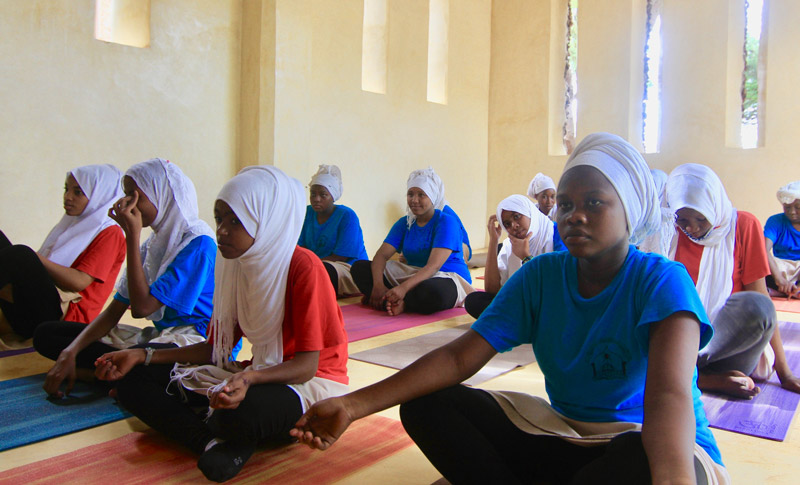
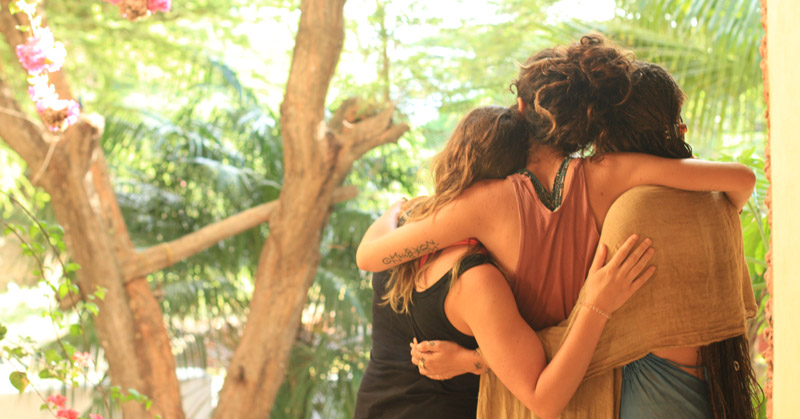
Community is our passion. We deeply acknowledge the communities where we are fortunate enough to operate. We offer a scholarship each YTT to an individual who we believe will take the practice to an underserved community and spread the healing benefits of yoga. We encourage community donation based yoga and have founded a project in Uganda, which operates solely on donations.
A YTT is a transformational experience, you will connect and form deep friendships that will probably serve you through this lifetime. Although we talk about community in regards to outreach and diverse, restricted communities we also acknowledge creating a community and growing and supporting those in your neighborhood.
6) Off the mat
We live in a highly stimulated world surrounded by distractions, lights, noises, and invisible signals. Our lives are dynamic with to do lists that are impossible to complete. With all the pressures and stresses we don’t want yoga to be added to the never ending list. A good yoga teacher training will help you create balance, help you observe your tendencies and offer tools for responding to life’s challenges off the mat as well as on it. You will experience micro practices for those days when you just have 10 minutes to get centered, peaceful and grounded.
7) Fun
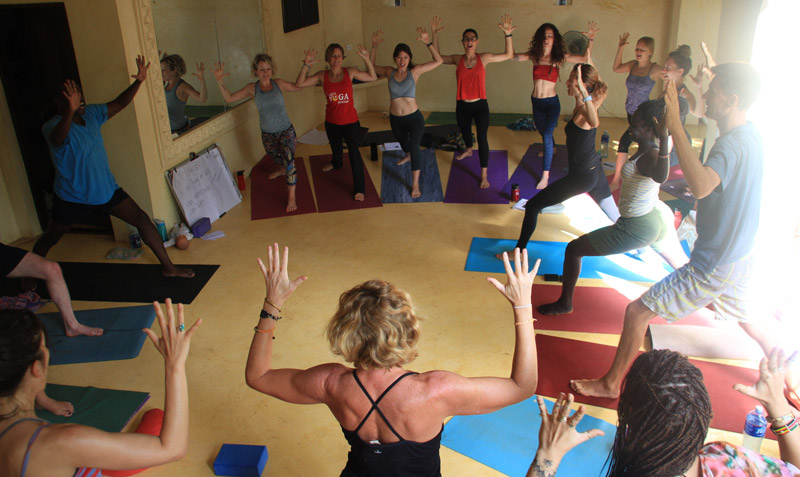
A YTT should be fun. There are enough things in life that cause stress or pain. Our yoga practice should be not add to this list. Whilst we teach with a strong emphasis on the roots of yoga and personal transformation we also realize the importance of embracing our human ness. #permissiontobehuman and to laugh is a guiding principle of our trainings.

 Benny started out practicing Hatha and Iyengar yoga from the age of 15, but only discovered Yin Yoga in 2015, finally becoming a teacher in 2017. Since then she has never looked back and continues training in and teaching this wonderful practice wherever and whenever she can. Based in Kenya, she teaches studio classes in Nairobi.
 Jordan has been practicing yoga for over 10 years in the US, Europe and Kenya. She received certification in Baptiste Power Yoga with the Africa Yoga Project in Kenya, completed the Karuna YTT in 2018 and recently completed a course in yoga for 12-step recovery.